King of Falafel — Menu Redesign for Camden's 3 AM Crowd.
King of Falafel is a late-night falafel shop in Camden that thrives on the post-pub crowd. The food and the hospitality bring people back; but the menu, displayed on screens above the counter, was working against the experience it was meant to support. I ran on-site research at 3 AM, sketched, navigated the client feedback, and arrived at a redesign grounded in readability and the specific reality of ordering food in Camden after midnight.
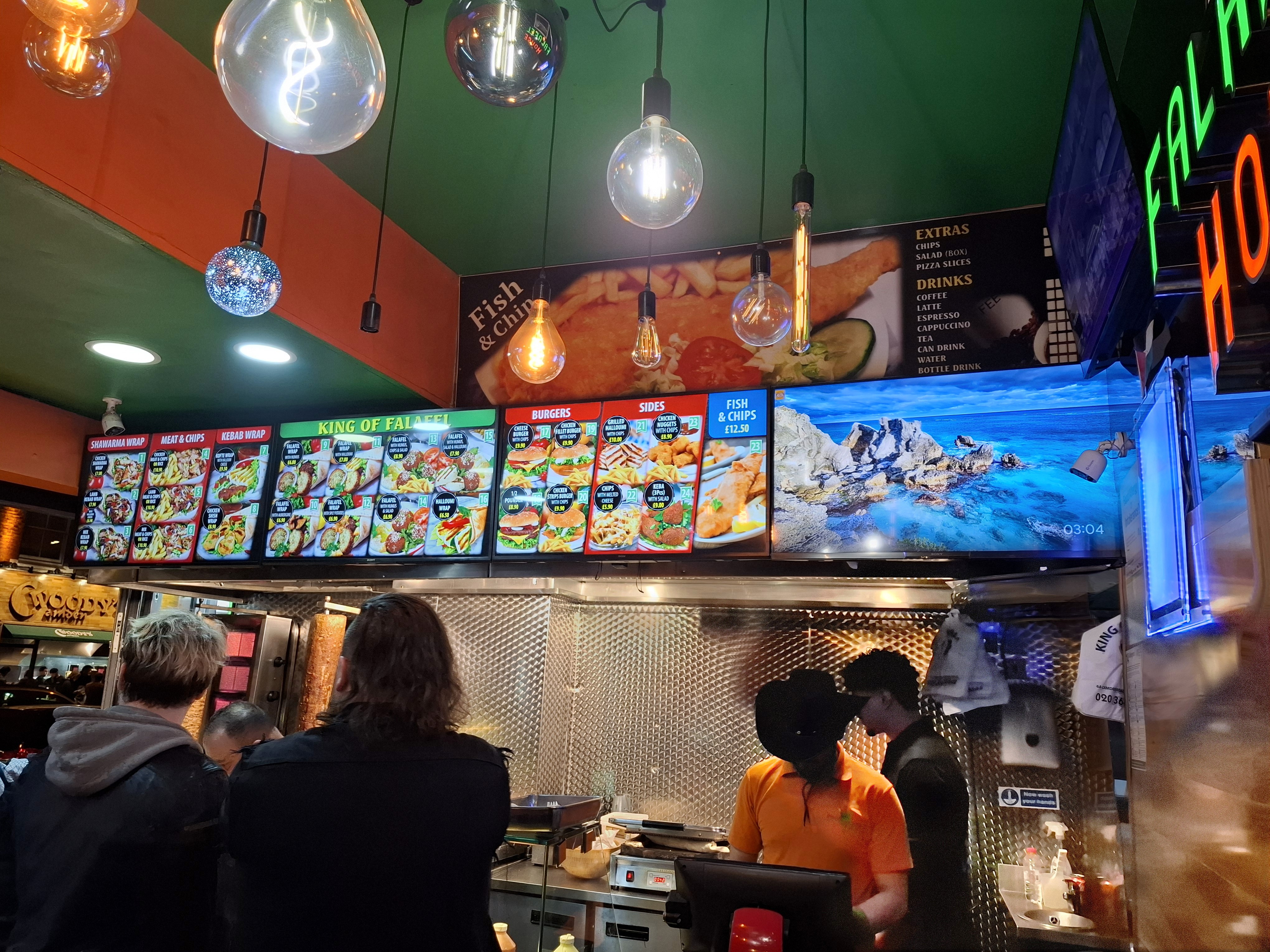
The existing menu lived on overhead screens. The font was deliberately large, the layout was photo-heavy, and at first glance it looked fine. The problem only revealed itself in context — late at night, with a queue building, with customers who had spent the evening somewhere else first.
Interviews
April 12th at 3 AM
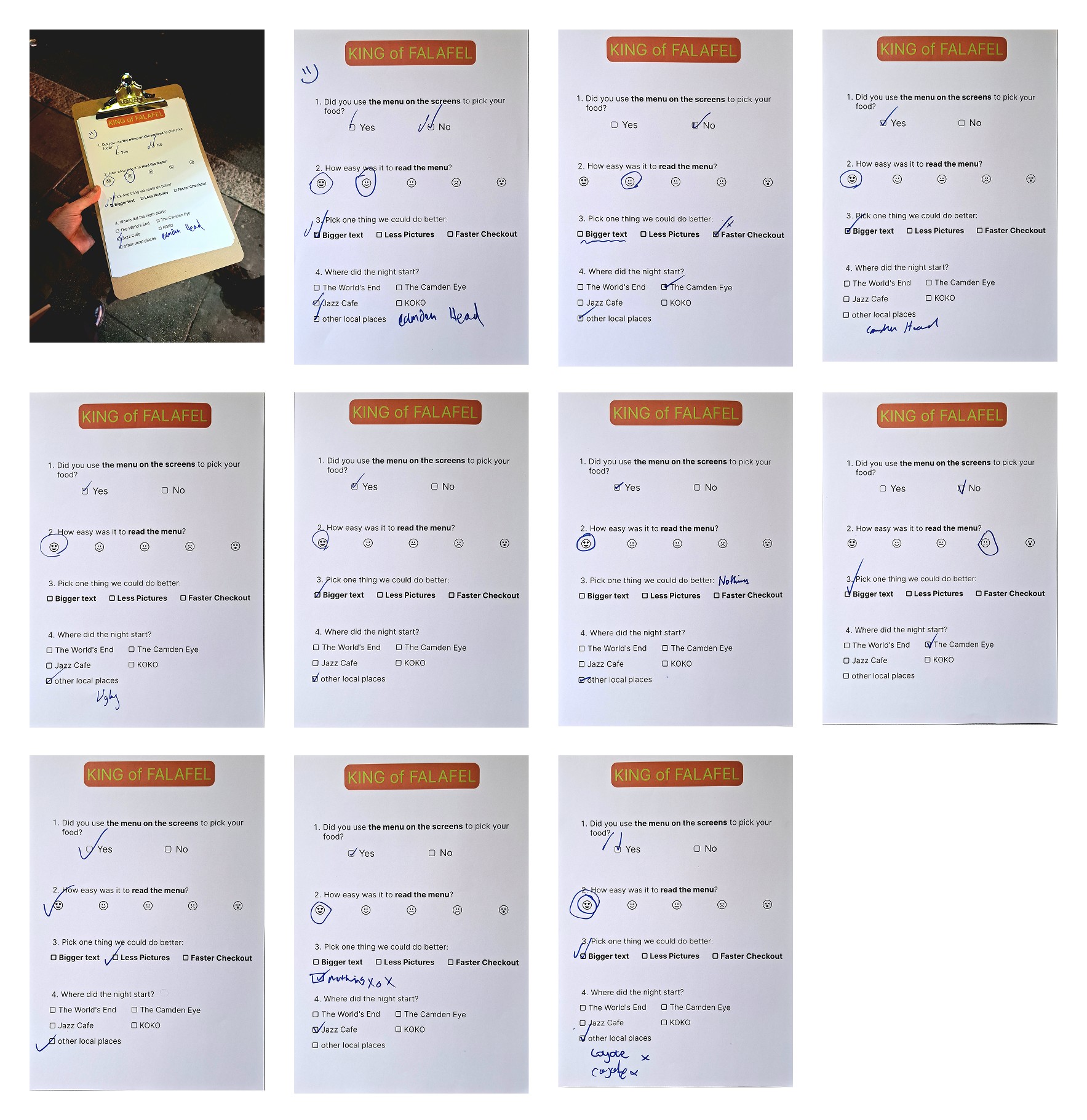
On Sunday, I went to King of Falafel and ran the research on the floor. I approached customers right after they paid, while the experience was still fresh, and asked them to fill in a short questionnaire. Note: the questionaire was designed from a previous visit around same time understanding that cusemers are not able to answer demanding questions. See the documnets below.
30% didn't read the menu on the screens 9% were openly frustrated reading it 40% wanted bigger font 10% wanted faster checkout
Observations: many customers were drunk. While reading the menu they squinted; narrowing or partially closing their eyes; even though the type was already large. Several asked me to read the questions aloud and mark their answers on paper. At least five customers left the store during the session because ordering was too slow.
30% didn't read the menu on the screens 9% were openly frustrated reading it 40% wanted bigger font 10% wanted faster checkout
Almost all customers were regulars or relied on staff suggestions (30%). Improving readability; primarily through type size and clearer hierarchy — would directly speed up ordering and payment. A second insight emerged from where customers were coming from: Camden Head, Camden Eye, and Coyote Ugly Saloon. The menu had to feel native to that visual neighbourhood. With the interviews, I was able to make the following persona:
Meet Jamie!
Jamie is a 26-year-old Account Manager searching for a late-night meal in Camden at 2:45 AM. After hours of drinking, he is intoxicated, tired, hungry, and highly sensitive to bright lights. He has an extremely short attention span and wants a quick, filling wrap from a shop that feels like a natural extension of his night out, rather than a sterile chain.His goal is a fast, seamless transaction driven by instant visual clarity. Because his cognitive load is low, he relies entirely on simple cues to make a purchase decision.
Speed: Needs to understand options and prices within three seconds.
Portion Visuals: Demands images of large, overflowing food to justify an £11 price.
Frictionless Pay: Wants to order, tap his card, and leave immediately.
Jamie will walk out of the shop if ordering requires any mental effort or delay. His physical state makes standard menus difficult to navigate, causing him to use shortcuts.
Visual Strain: Small fonts blur, forcing him to squint at screens.
Text Overload: Cluttered layouts with too many ingredients overwhelm him.
Ordering Shortcuts: Skips reading completely to point at pictures or ask staff what is best.
Comparative Analysis and Contextual Approach
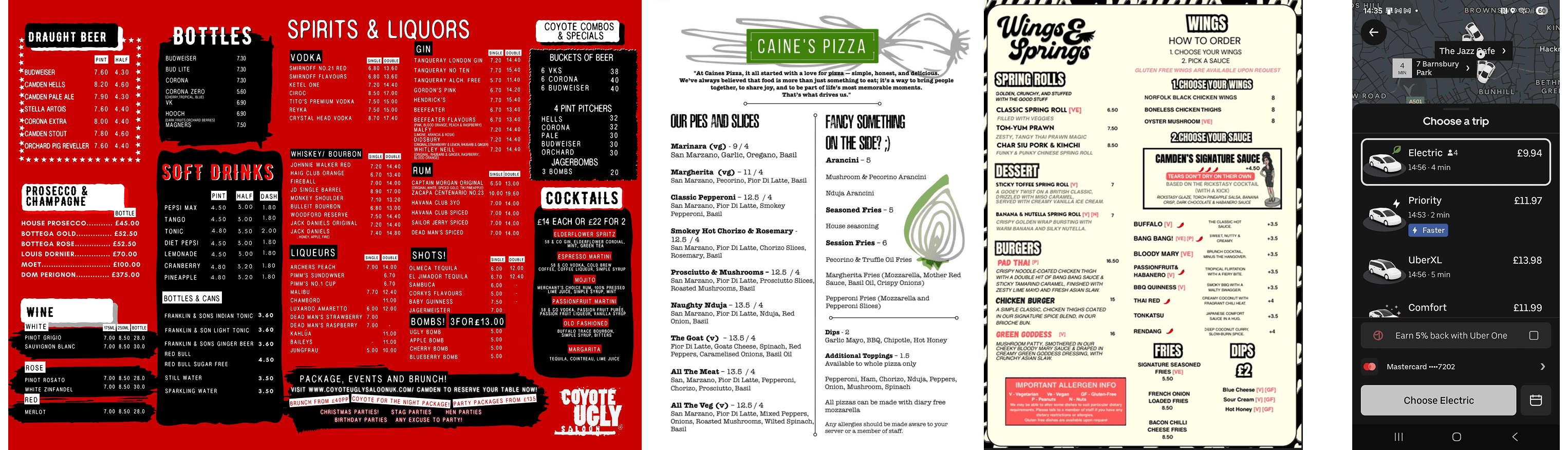
Design direction took its cues from Camden's punk aesthetic: textured surfaces, stencil typography, a palette that belonged on Camden High Street rather than in a chain store. The goal wasn't loud. it was native. A customer walking in from the pub shouldn't experience visual whiplash. For this reason I look at the surrounding pubs and resturants; also mentioned in the interviews. Lastly, as most of the interviewees order a cab via Uber, I used some of the visual features of the app's UI.
By looking at these menus and going to the locations, I decided to use Stardos Stencil font type and created rusty textues that illustrates over stanceil and uncouted/ damaged metal surfaces.
Meeting with the Client
Review Phase
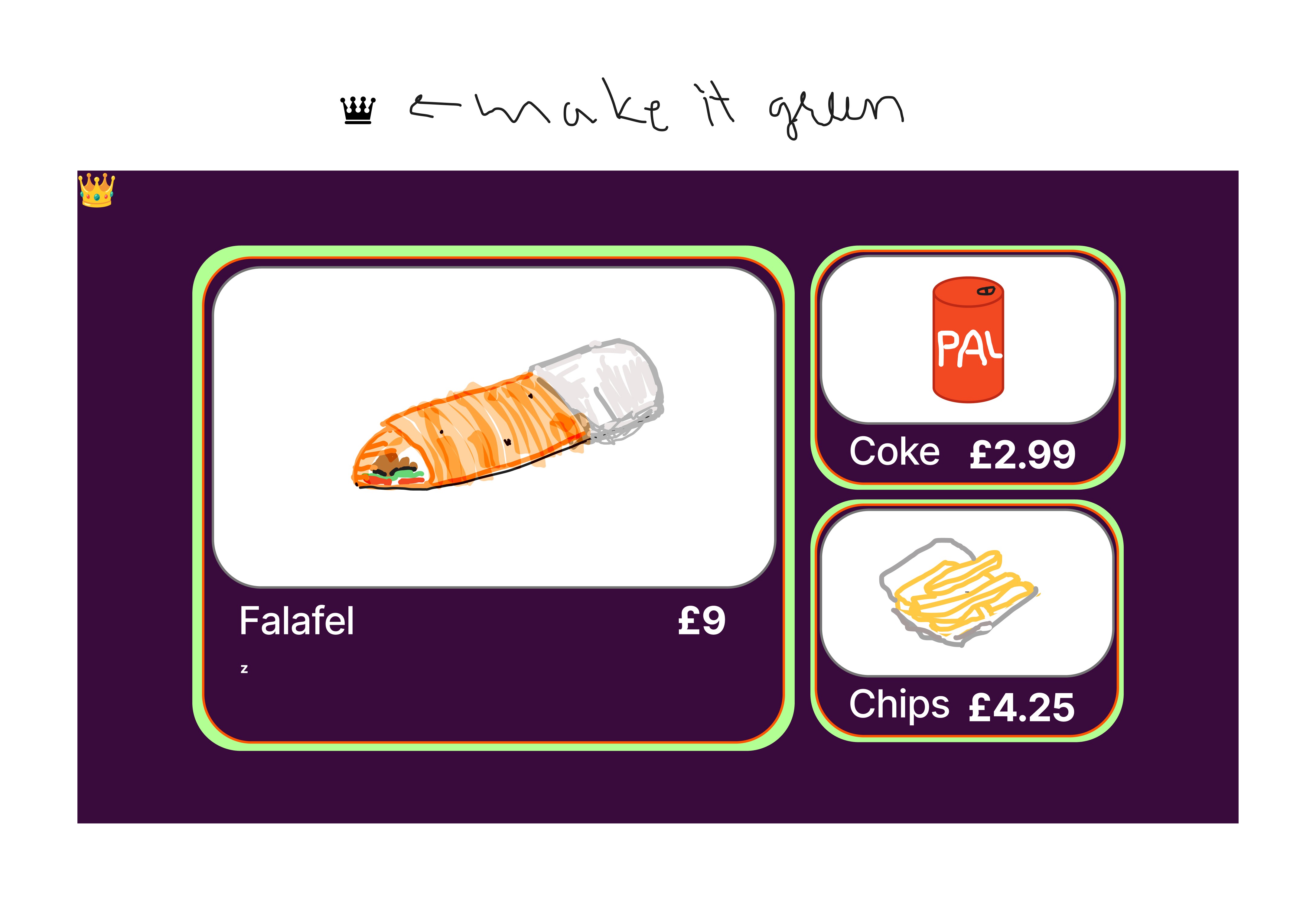
During the review phase, the client noted that the initial layout lacked visual dynamism, specifically pointing out that the imagery felt flat and the whitespace was underutilized. This was an interesting pivot from their initial reference to Subway’s minimalist aesthetic.
A key insight emerged around the "Meal Box" component: the client wanted to emphasize freshness and abundance, visually communicating high value for the price. They requested that the vegetables "shine" and appear to overflow from the box.
Pivot Strategy:
To address this, I shifted the visual direction by auditing the current menu and implementing the following changes:
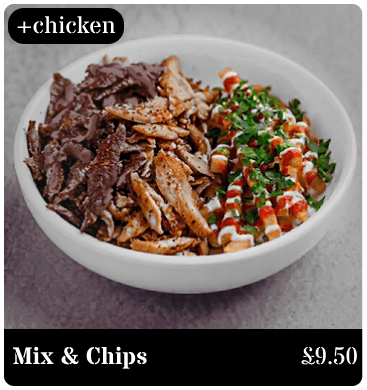
Imagery: Remade and styled the food assets to emphasize depth, freshness, and abundance.
Color Palette & Typography: Refreshed the color scheme to boost appetite appeal and introduced a bold stencil typeface to inject energy and character into the layout.
I prioritised legibility for tired or impaired vision: larger type, higher contrast, fewer competing elements per item. The client originally asked for something like Subway; clean and organisied, which I replaced the images with generative images prompting Nano Banana with meals with fresh vegtables.
I decided to return to the existing menu's structure and rework it from the inside: remade photography, new colour palette, stencil typefaces.z